This section expands on concepts introduced in the guide with infographics that can support dialogue in your organization.
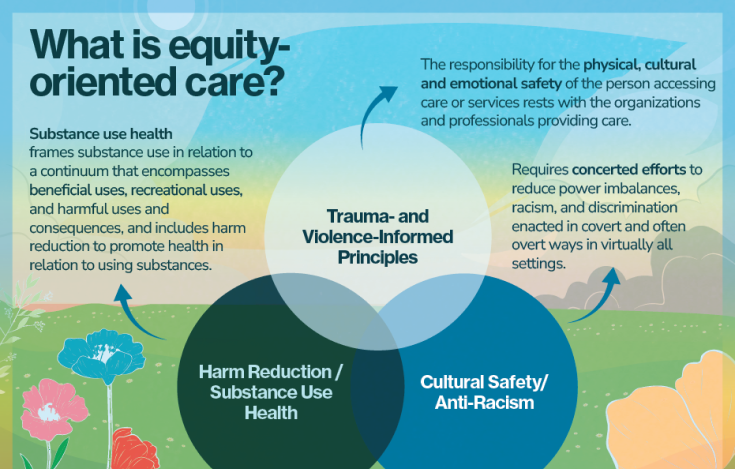
EOC is an evidenced-based, best practice model of care and a philosophy that was developed by and for the Canadian healthcare sector. EOC is applicable for any human service. Studies have shown that EOC addresses the systemic inequities and social determinants that impact health outcomes, ensuring that all individuals receive care that is fair, respectful, and responsive to their specific needs and circumstances.
Download Infographic: What is Equity Oriented Care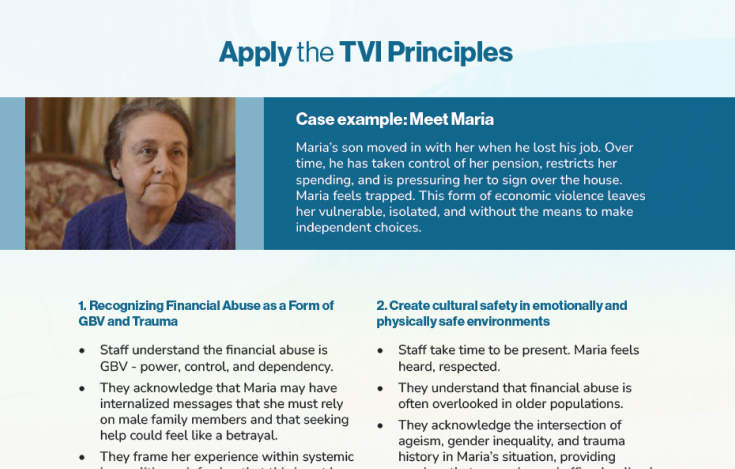
EOC Key Element: Trauma – and Violence – Informed Care: The Public Health Agency of Canada states: Trauma-informed approaches are familiar to many organizations and service providers. [Over the past decade] this term has been expanded to include "violence", an important change in the language which underscores the connections between trauma and violence, with specific attention to interpersonal violence like IPV, and structural forms of violence that drive GBV, such as misogyny. Trauma – and Violence- Informed Care (TVIC) applies4 principles to be integrated into the organizational culture on the path that is walked best with cultural humility.
Download Infographic: Apply TVI Principles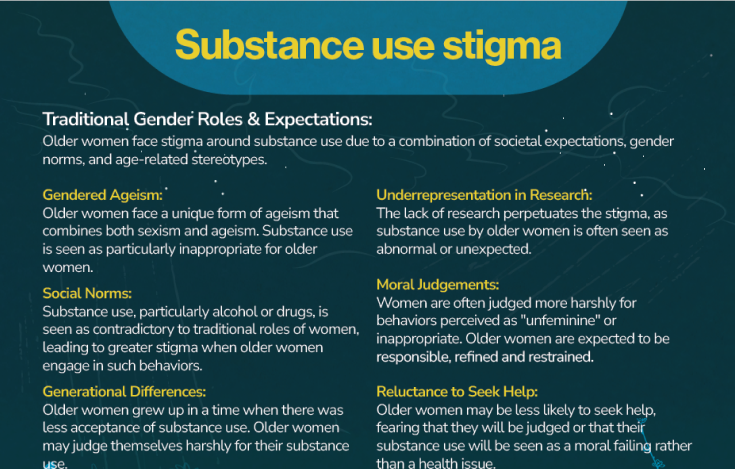
EOC Key Element: Substance Use Health: Older women who experience GBV may turn to substances as a coping mechanism to manage the psychological and physical pain associated with their trauma. Substance use health exists on a continuum that encompasses beneficial uses, recreational uses, as well as harmful uses and consequences. Harm reduction strategies are promoted to minimize ill health and other harms in relation to using substances.
Download Infographic: Substance Use Stigma of Older Women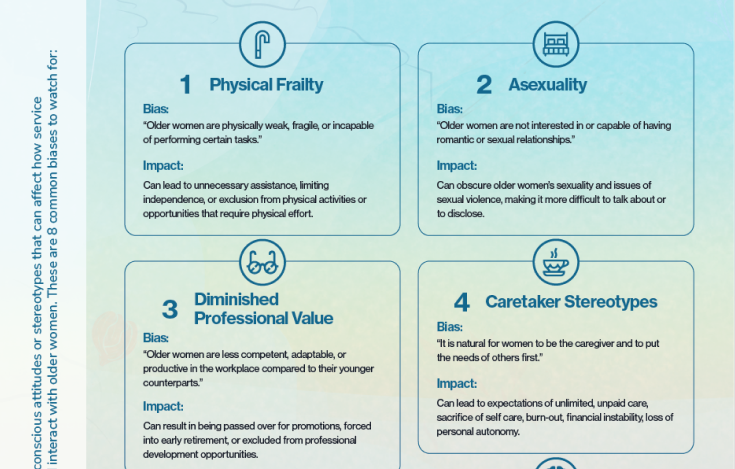
EOC Key Element: Cultural Safety / Racism: In addition to ageism and sexism, older women may face discrimination based on race, gender identity, sexual orientation, ability, immigration status, language, geography, or religion. These intersecting forms of oppression shape how GBV is experienced and responded to. Power imbalances between service providers and service users can further compound harm, especially when implicit biases go unexamined. Meaningful, equity-oriented responses require reflection on how these biases influence decision-making, access to care, and the quality of support offered.
Download Infographic: Implicit Bias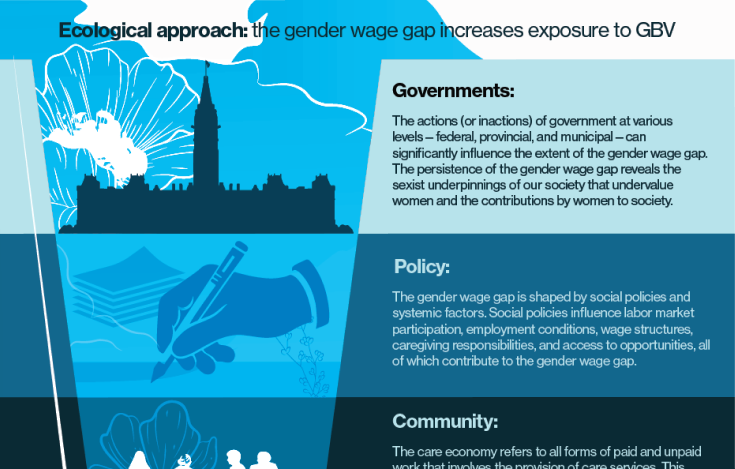
The gender wage gap is an example of a policy with impacts that accrue over a lifetime, exposing women to increasing risk for GBV as they age.
Download Infographic: The Ecology of Gender Inequality: The Gender Wage Gap
GBV is deeply embedded in the societal exploitation of care professionals, most of whom are women, particularly in sectors serving older populations. The undervaluation of care work, chronic underpayment, job insecurity, and workplace abuses are not just labour issues; they are manifestations of gender based violence. Older female professionals experience unique challenges. As employers, human service organizations can ensure their own
Download Infographic: Safety and Respect at Work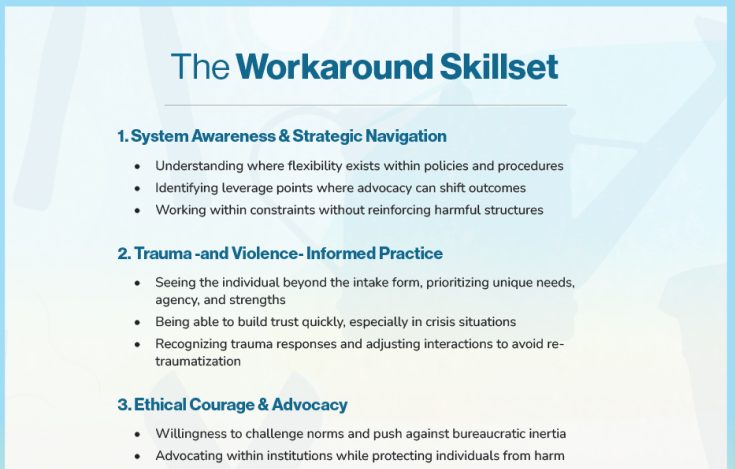
Variations in service are sometimes described as ‘workarounds’ that tacitly rely on service providers to ‘bend the rules’ to make the system work for this person. By supporting adaptive practices as competencies, staff can be empowered and better supported to provide equity-oriented care. Flexibility and respect for individual judgement and responsiveness are intentional design choices, not temporary fixes. Valuing and supporting those who have the workaround knowhow and skillset may also support retention to counter moral distress.
Download Infographic: The Workaround Skillset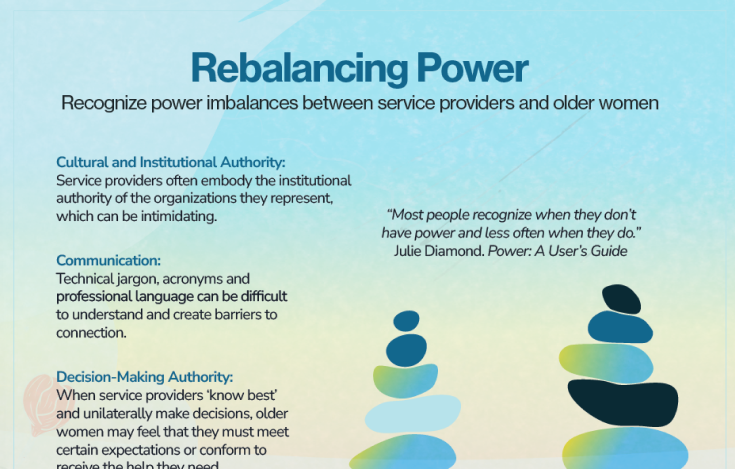
uneven power dynamics in a service relationship to foster mutuality. Mutuality isa critical element in creating cultural safety because it fosters respect, reciprocity, and shared understanding between service providers and older women they serve. Cultural safety focuses on creating environments that are free from discrimination, where individuals feel respected and safe, especially in terms of their cultural identity.
Download Infographic: Rebalancing Power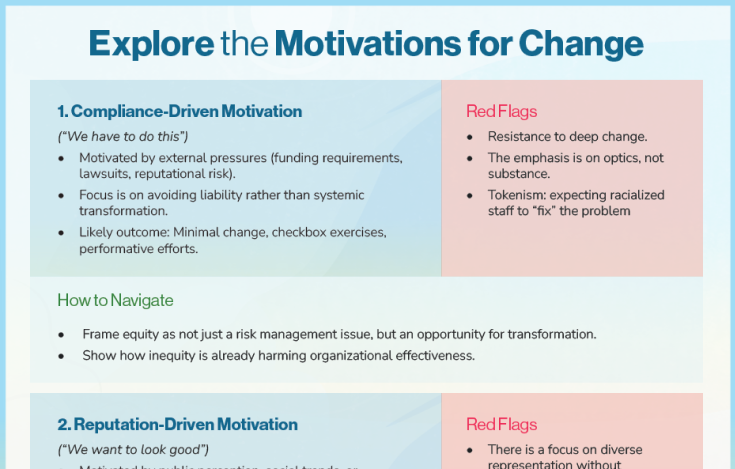
Explore the motivations, spoken and unspoken, that shape your change process. Resistance is inevitable but anticipating it and clearly articulating your ‘why’ early on can help build alignment and momentum. Why does this change matter? What difference will it make? When resistance is ignored, it can quietly undermine progress. Create space for honest dialogue to surface the fears, hopes, and values that can either support or stall the effort.
Download Infographic: Explore the Motivations for Change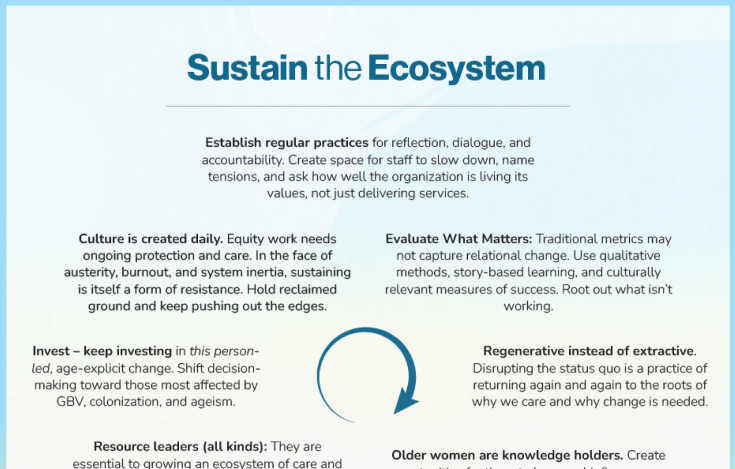
Perform regular pruning. Let go of harmful or outdated practices. Challenge assumptions that have become overgrown and normalized. Remove barriers that crowd out new growth. Know when to pause, reflect, and shift.
Download Infographic: Sustain the Wildflower Ecosystem
CNPEA builds awareness, support and capacity for a coordinated pan-Canadian approach to the prevention of elder abuse and neglect. We promote the rights of older adults through knowledge mobilization, collaboration, policy reform and education.
The Wildflower Project is a 5-year initiative led by CNPEA and informed by a diverse group of partners across many sectors including shelters, interval and transition housing, violence against women, elder abuse, and community support services for older adults.
Learn more about CNPEA