The status quo in services for older women who are victim-survivors of gender-based violence is unacceptable.
In Canada, services for older women who have experienced gender-based violence (GBV) are scarce or nonexistent. GBV is targeted violence most often committed against women, girls, and gender diverse people. GBV occurs at all ages and across all demographics. Whereas elder abuse emphasizes vulnerability related to age, dependency and cognitive or physical decline, GBV is rooted in systemic power imbalances and the unequal social positioning of women. These differing frameworks shape how risks are assessed and interventions are designed, which can obscure the gendered nature of violence experienced by older women. The absence of GBV services for older women underscores the need for a gendered and intersectional lens in both policy and practice.
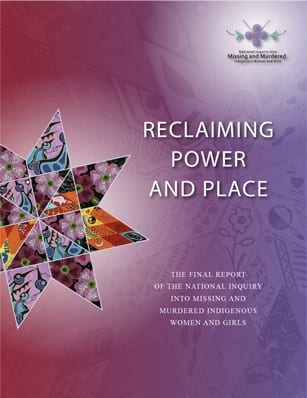
GBV has been recognized as an epidemic by all three levels of government in Canada. Women who are pushed to the margins of society, particularly those impacted by racism, colonization, and systemic inequality, experience the highest rates. For example, Indigenous women are seven times more likely to be killed than non-Indigenous women. The National Inquiry into Missing and Murdered Indigenous Women and Girls, in its final report Reclaiming Power & Place, along with the Canadian government, has recognized GBV under colonization as a systemic and genocidal form of violence.
Ageism has created a significant gap in GBV research. Intimate partner violence (IPV) is the most commonly reported and recognized form of GBV globally, yet major studies on IPV and non-partner sexual violence (WHO, 2013; 2018) excluded women over the age of 49. This exclusion reflects and reinforces the inaccurate assumption that women beyond midlife are not at risk of GBV. Ageist assumptions that are built into research methodology shape what is counted, who is visible, and ultimately, what gets funded. The absence of data on older women helps to explain the lack of services. Invisibility justifies inaction. The impact carries over into Canada’s National Action Plan to End Gender- Based Violence (2022). While “seniors” are referenced, older women are not recognized as a distinct group, despite being identified by the Canadian Femicide Observatory for Justice and Accountability as experiencing disproportionately high rates of femicide.
The gender dimension of aging is unevenly reflected in policy discussions and decision-making.
- UN Advocacy Brief on Older Women
Ageism, described as the most socially tolerated form of discrimination, sets up unique barriers for women beyond their reproductive years. They are less valued in a society that fails to change the structures that uphold the status quo of gender inequality, making women even more vulnerable to violence as they age.
The final report of the National Inquiry into Missing and Murdered Indigenous Women and Girls calls for establishing a new framework in human services that centres relationships, the voices and leadership of Indigenous women, in every encounter. It is a powerful vision for transformation that has inspired all aspects of this project.
Read:
Establish a New Framework in Reclaiming Power and Place (pgs. 89-101)
The Wildflower Framework is a narrative change intervention that challenges dominant models in human services which devalue care and render aging invisible. It supports professionals to integrate services for older women who have experienced GBV into broader equity efforts through relational, trauma- and violence-informed practice. Rather than rejecting the structure of business models, it invites transformation from within, growing equity-oriented care in the cracks of rigid systems.
The change process is likened to growing wildflowers in a concrete environment. Wildflowers are resilient; they find the smallest spaces to bloom. Over time, they can transform the landscape. Older women who have survived a lifetime of trauma and violence are similarly resilient. They embody the potential for growth and transformation even in the harshest conditions. The Wildflower framework is both a metaphor and a practical guide for nurturing this growth, offering a path toward sustainability, healing, and genuine systemic change in human services. Care is not just
Care is not just an act of kindness but a form of resistance against systems that neglect, exploit, or erase older women's
GBV rates are projected to rise amid growing economic disparity, inequity, and insecurity, and as the population is aging. In this time of shrinking social safety nets and austerity, it is impossible to imagine that dedicated new services for older women will be created or financed. The impossibility forces us to think differently and to look for solutions elsewhere. We can look to the resourcefulness and resilience of women who have always found ways to endure and resist, even in the most oppressive conditions.
If you provide care of any kind, what you do matters now even more. As rights are being eroded and climate concerns call our very existence into question, the challenge is to stay engaged, to continue to care and to believe that equity is possible. There is healing in being part of something larger than oneself, by being the change that is wanted, not in isolation but always in partnership with others and the land.
A person does not need positional authority or formal power to be a leader or to have influence. Leadership that is grounded in the ability to navigate existing constraints while cultivating new possibilities is the key to large social change. Relational leadership thrives in collective action, mutuality, deep listening, and everyday acts of creation and disruption, reshaping systems from within to support older women and care professionals.
The Wildflower Guide and Tools are for anyone willing to lead from their place in the system, recognizing that transformation is collective, interconnected, and sustained by the interplay of vision, inspiration and action. Every action has an impact.
The goal is not simply to include older women in existing systems, but instead to imagine new ways of co-creating services, with approaches that intervene earlier, promote healing, and support both those seeking and providing services.
CNPEA builds awareness, support and capacity for a coordinated pan-Canadian approach to the prevention of elder abuse and neglect. We promote the rights of older adults through knowledge mobilization, collaboration, policy reform and education.
The Wildflower Project is a 5-year initiative led by CNPEA and informed by a diverse group of partners across many sectors including shelters, interval and transition housing, violence against women, elder abuse, and community support services for older adults.
Learn more about CNPEA