Introduction & Key Concepts
EOC is an evidenced-based model of care and a philosophy that was developed for the Canadian healthcare sector. EOC can be implemented through 10 strategies in any human service. Studies have shown that EOC addresses the systemic inequities and social determinants that impact health outcomes, ensuring that all individuals receive care that is fair, respectful, and responsive to their specific needs and circumstances.
One key dimension of EOC, through which the others also operate is becoming trauma and violence- informed (TVI) through implementation of the four principles. TVI organizations are both outward looking, reflecting on the quality of how service is delivered and inward facing, reflecting on the quality of the workplace as an employer.
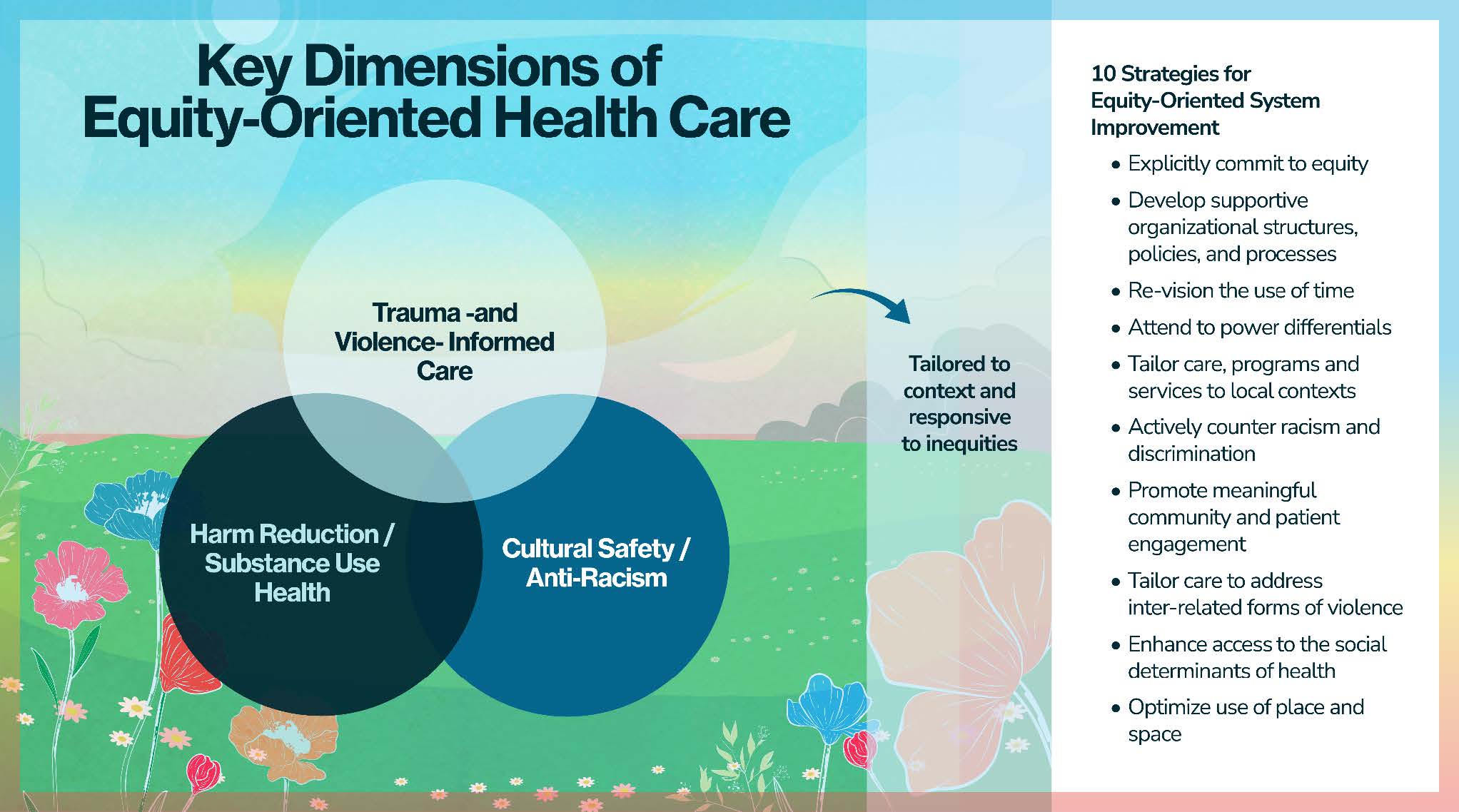
Adapted from Browne et al., 2015, used with permission
TVI principles are a Canadian innovation, building on established trauma-informed knowledge and skills.
TVI principles are designed to support system-level interventions that improve service experiences and reduce harm across all sectors. Rather than encouraging victim-survivors of gender-based violence (GBV) to disclose detailed accounts of their trauma, TVI approaches emphasize creating safety, choice, and trust. They also caution against treating trauma symptoms in isolation from the broader social, cultural, and structural contexts in which violence occurs.
Instead, TVI principles foster an environment where everyone seeking service can feel safe, with less possibility of being retraumatized by the service or organization. The principles recognize the impact of individual trauma (e.g., violence and abuse, de-housing, time spent in jail, etc.) as well as structural violence and inequities (e.g., racism, colonization, ableism, ageism) on a person’ health and well-being as well as how they interact with services.
Structural Violence describes the structures that underpin society such as policies and laws. They are structural in the sense that they serve as the bones for the economic, political, legal, religious, and cultural organization of a society. Often the structures seem so ordinary (are so normalized) in our ways of understanding the world, they are effectively invisible. Harm is caused to individuals and whole groups of people when these structures prevent them from reaching their pull potential. Unequal access to resources, political power, education, health care, and legal standing are just a few examples.
Read the Wildflower Guide and GBV Primer to learn more the issues facing older women who have experienced gender-based violence and more about EOC and TVI principles.
Also visit the Equip Health Care website. See the Organizational Action Tools resources and the Organizational Discussion Tools.
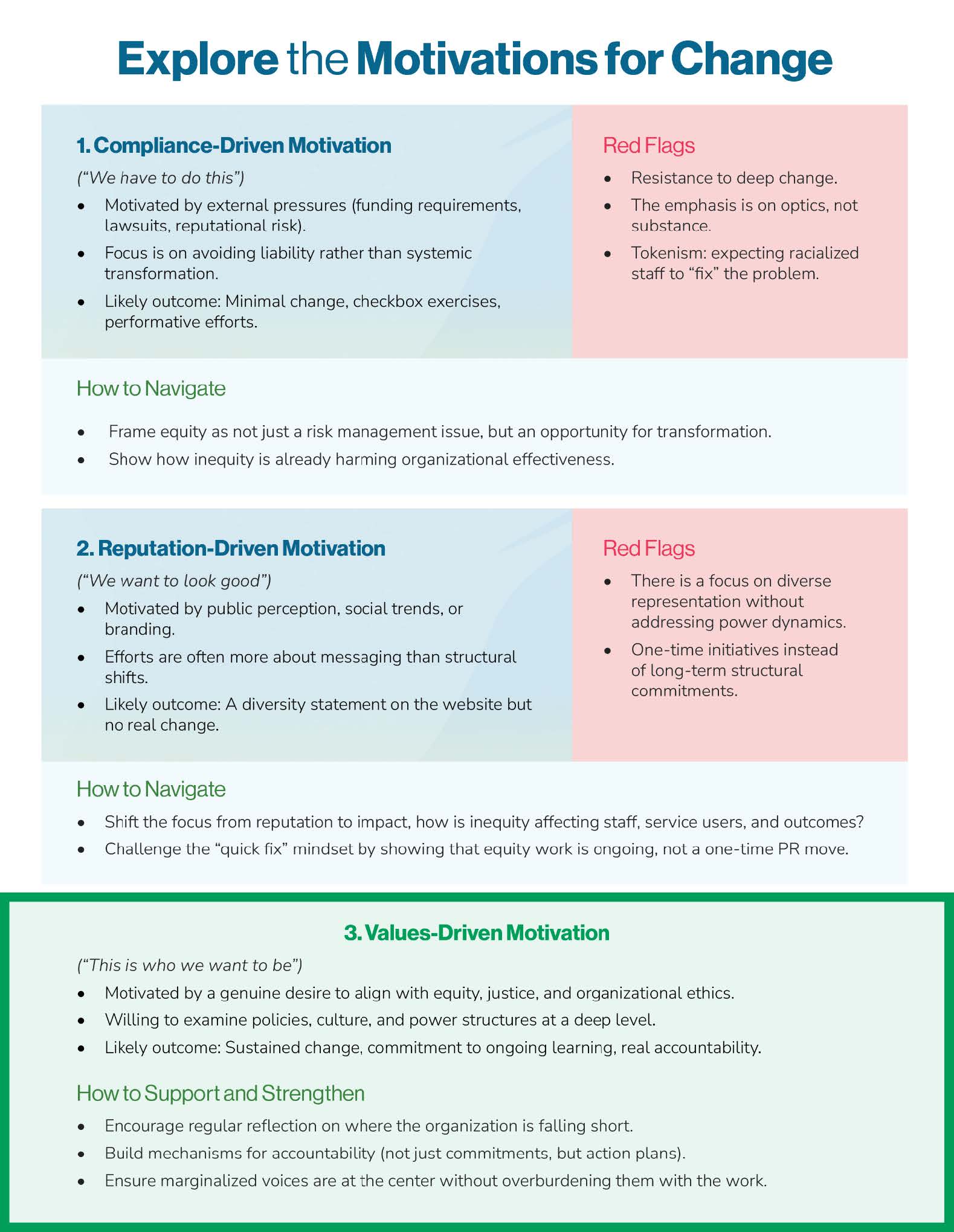
Before starting the organizational assessment, consider the motivation behind it. Why now? Understanding the driving force is crucial because it determines:
Bottom Line: Why Motivation Shapes Your Assessment
Understanding motivation helps you tailor your approach—whether that means breaking through resistance, shifting the conversation, or deepening existing commitments.
It also helps you set realistic expectations—is this an organization ready for real change, or one that needs to be challenged out of performative efforts?
Finally, it determines how equity efforts will be received, because equity work is about power, and how an organization understands power will shape whether this work thrives or is quietly sidelined.
CNPEA builds awareness, support and capacity for a coordinated pan-Canadian approach to the prevention of elder abuse and neglect. We promote the rights of older adults through knowledge mobilization, collaboration, policy reform and education.
The Wildflower Project is a 5-year initiative led by CNPEA and informed by a diverse group of partners across many sectors including shelters, interval and transition housing, violence against women, elder abuse, and community support services for older adults.
Learn more about CNPEA