
A holistic view is needed to rethink how services are designed, delivered, and sustained. Wildflowers grow in ecosystems of interdependent conditions and relationships. Like gardening, organizational change is not linear. Even when cultivated with care, wildflowers resist tidy rows and predictable outcomes. Implementation unfolds in cycles, loops, and spirals—relational, iterative, and responsive to what emerges. Over time, patterns and practices take root through reinforcing actions, thoughtful adjustments, and ongoing reflection.
The framework is not a checklist, but more a living practice. Each step is necessary to nourish the whole. The process takes time. Start from where you are. Finding cracks in the concrete of rigid systems requires persistence and a path with a visible horizon. It’s important to allow practices and systems to repair and evolve, while also acknowledging the older women who are experiencing GBV should not have to wait for better care.
GBV is a systemic issue. Recognize GBV is embedded in ageist assumptions, institutional norms, and fragmented responses. Ageism has excluded older women from the societal response to GBV.
Resist: Disrupt one-size-fits-all approaches by focusing on this woman in every instance. Integrate the focus into the organizational culture.
Reframe: Root out internalized ageism. Centre older women as collaborators, co-creators, and knowledge-holders in the change process.
The exception becomes the rule. Every encounter holds potential for transformation. A clear, shared rationale is essential for becoming “this person-led” in practice.
Plan the garden: The Wildflower organizational assessment can help identify areas to cultivate in order to create the conditions that normalize and embed the exception narrative.
Design with intention: Honour the ‘workaround’ as insight into where systems fail. Build capacity to ask: How can I make the current system work for this (and every) woman?
Daily practice and reflection. Meaningful change demands continuous emotional and ethical reckoning with how policies and practice impact people. Training alone is never enough.
Fertilize the ground: Active Implementation Frameworks (AIF) support change through clear stages, implementation drivers (including relational competencies), with continuous quality improvement. See the organizational assessment.
Root the Relationships: Prioritize the quality of relationships in all aspects of the work, with clients, volunteers, staff, coworkers, and community partners.
Highlight success. Create feedback loops so that success can be shared, adapted, and sustained across the organization. Relational work requires ongoing reflection, care, reciprocity, with attentiveness to how power is being used and the quality of support being provided. Anticipate and address resistance.
Tend the garden: Celebrate what blooms. Centre older women’s voices and leadership to challenge paternalism and foster this-person led responses.
Regular Pruning: Let go of harmful or outdated practices. Challenge assumptions that crowd out innovation. Clear space for new growth through pause, reflection, and repair.
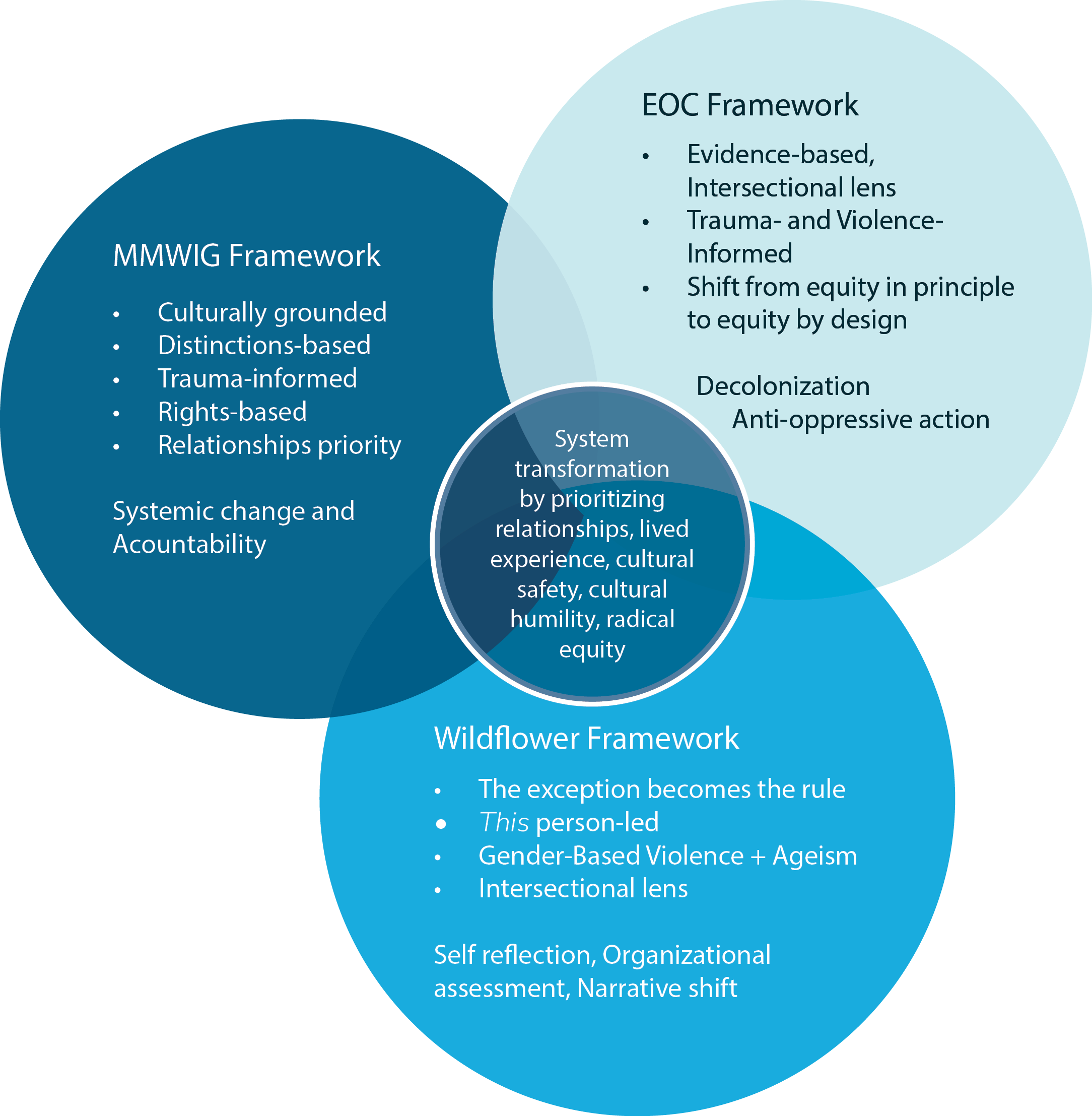
The Wildflower Framework does not stand apart from other equity-based frameworks and can be seen as a contribution that brings the often-overlooked experiences of older women into intersectional, trauma -and violence- informed, and anti-colonial GBV responses.
CNPEA builds awareness, support and capacity for a coordinated pan-Canadian approach to the prevention of elder abuse and neglect. We promote the rights of older adults through knowledge mobilization, collaboration, policy reform and education.
The Wildflower Project is a 5-year initiative led by CNPEA and informed by a diverse group of partners across many sectors including shelters, interval and transition housing, violence against women, elder abuse, and community support services for older adults.
Learn more about CNPEA